A brand manager with a fixed budget faces the same decision every quarter. One creator with four hundred thousand followers, or forty creators with ten thousand each. The instinct is almost always to buy the big number, because the big number is easier to defend in a review meeting.
The benchmark data has been pointing the other way for years, and it keeps pointing the same way.
The one finding that stays stable
Engagement rate moves inversely to follower count. Smaller accounts consistently see a higher share of their audience react, comment, save and share. This holds across Instagram, TikTok and YouTube, it has held across multiple annual benchmark reports, and it is described in the industry literature as one of the most stable findings in the field.
The reason is structural rather than mysterious. Platforms have progressively deprioritised broadcast content in favour of content people actually respond to. A creator with ten thousand followers is usually talking to a group they partly know. A creator with two million is publishing to an audience, and audiences behave passively.
The 2026 numbers, with the caveat attached
Published Instagram benchmarks for this year sit roughly like this. Nano creators, meaning one thousand to ten thousand followers, land around three and a half to six percent, higher on Reels. Micro creators at ten thousand to a hundred thousand come in around one and a half to three and a half percent. Past a million followers, engagement typically falls to somewhere between half a percent and two percent.
Now the caveat, because it matters more than the numbers. Different reports publish noticeably different figures for the same tiers. Some put nano creators near nine or fifteen percent, others near four. They are not contradicting each other so much as calculating differently.
Followers or reach in the denominator
Engagement rate can be calculated as interactions divided by follower count, or interactions divided by actual reach. The reach-based version is more accurate and produces very different numbers, but reach data is harder to obtain. When someone quotes you an engagement rate, ask which denominator they used. If they do not know, the number is decoration.
Where the budget argument actually lands
Cost per post is the wrong metric and it is the one most brands negotiate on. Cost per engagement is the number that decides whether a campaign worked.
Industry benchmark reporting has micro creators delivering meaningfully higher engagement than mega creators at a small fraction of the cost per post, with figures around sixty percent higher engagement at roughly a tenth of the price commonly cited. Even if you discount those numbers heavily, the direction is not in dispute.
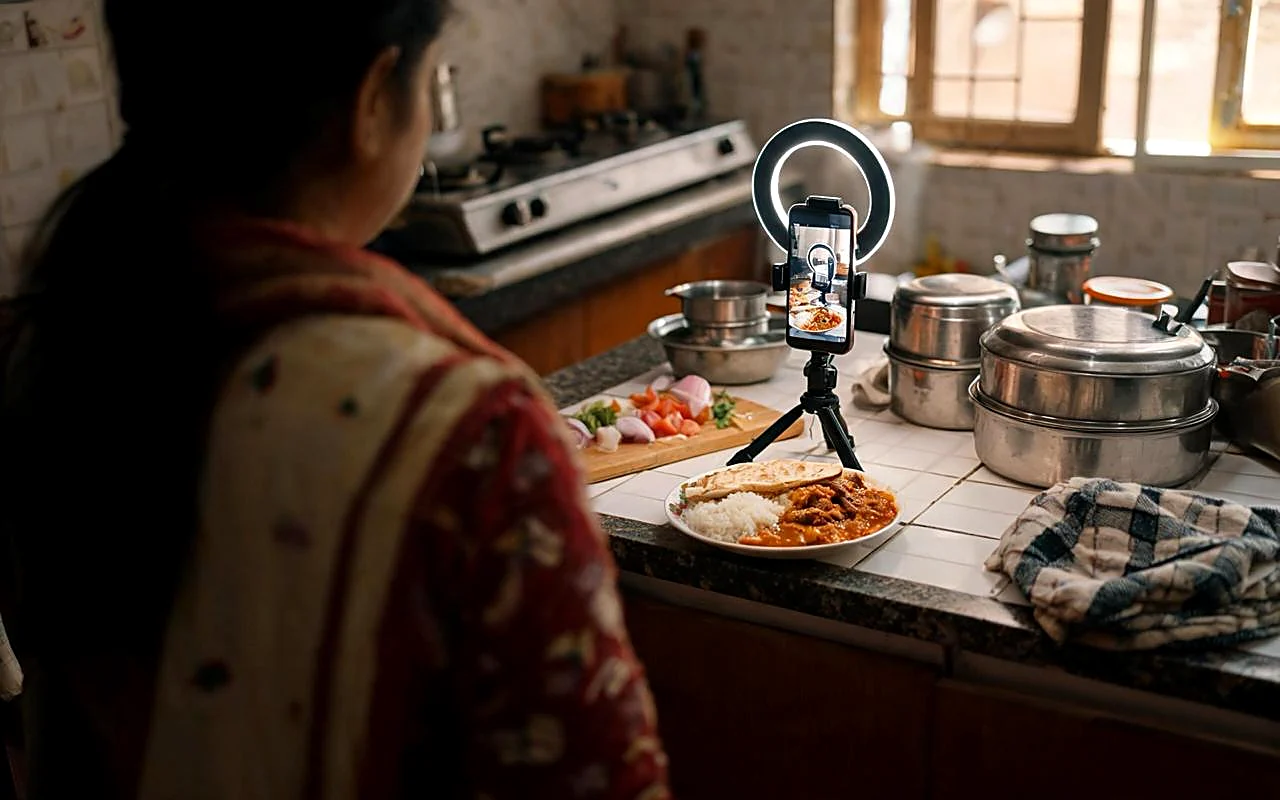
There is a second effect that rarely makes it into the spreadsheet. Forty creators produce forty pieces of content in forty different homes, kitchens and neighbourhoods. One creator produces one. For a brand that needs assets as much as it needs impressions, the smaller cohort is doing two jobs.
What we see across DFZ campaigns
These are our internal campaign figures rather than industry research. Across the campaigns we have run, we see roughly three and a half times higher conversion from micro creators than from larger accounts, and around four times higher engagement on community led content than on equivalent paid placement. Our tiers run nano at one to ten thousand, micro at ten to fifty thousand, and top tier at fifty thousand to a hundred thousand.
When the big account is the right buy
Anyone who tells you never to book a mega creator is selling a roster of small ones.
Large accounts still win on three things. Speed, when you need a market to know something exists by next week. Category creation, when the product needs explaining rather than recommending. And credibility by association, where the point of the booking is that a particular person was willing to be seen with your brand at all.
What a mega creator does not reliably deliver is the sense that a real person made a decision. That is the thing you are buying at the small end, and the two purchases are not interchangeable.
The vetting problem nobody budgets for
Small accounts are easier to fake. Follower counts can be bought, engagement pods can be joined, and a five percent engagement rate can be manufactured cheaply enough that manufacturing it is worth someone's time.
Nano creators now make up the large majority of the Instagram creator ecosystem, so the pool is enormous and largely unvetted. That is the real cost of running a forty creator campaign instead of one, and it is a people cost rather than a media cost. Check comment quality rather than comment count, check whether followers and audience location match the market you are buying, and check whether the account posts anything that is not a paid partnership.
We run this end to end
DFZ Media manages creator campaigns across Instagram, Facebook groups and YouTube, from a vetted network reaching 80M+, alongside 51K+ owned community members. 500+ campaigns delivered.
The short version. Buy reach from large accounts when you need reach. Buy belief from small ones when you need belief. Most brands are buying the first and hoping for the second.