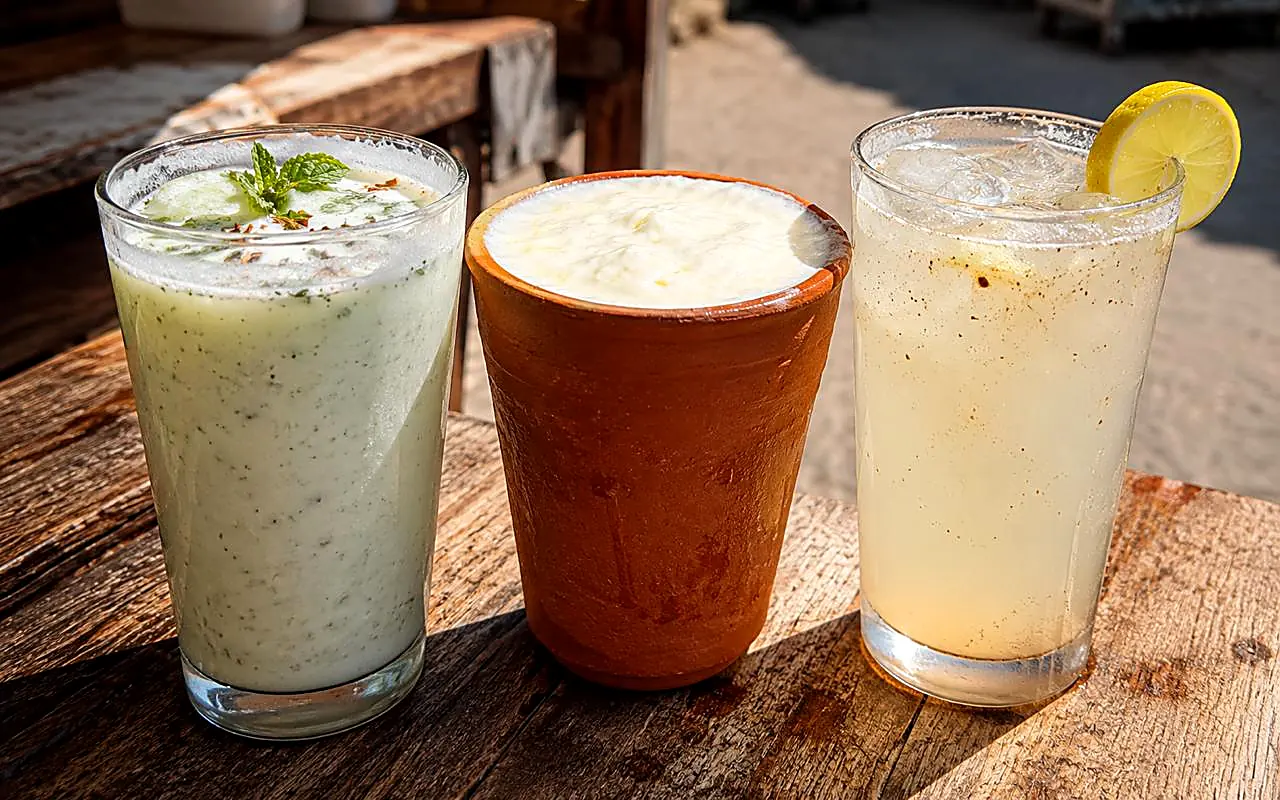
Every Delhi summer produces the same argument. Somebody insists chhach is the only sensible drink. Somebody else says nothing beats a proper lassi. A third person quietly orders shikanji and refuses to participate.
There is no winner, and the reason is that the three drinks are solving different problems. Once you know which problem you have, the choice becomes obvious.
Why plain water is not the benchmark
Sweat takes fluid out of you, and it takes minerals with it. Sodium mostly, along with potassium, magnesium and calcium. Replace only the water and you have replaced only half of what left.
This is the logic behind oral rehydration solution, and it is worth understanding because two of these three drinks are running the same play by accident. Sodium and glucose together are absorbed through the intestinal wall by a shared mechanism, and water follows them across. A little sugar with a little salt moves water into you faster than water alone does. Indian summer drinks arrived at this centuries before the sachet existed.
Chhach, the everyday one
Chhach, or chaas, is curd whisked out with water until it is thin, then seasoned with salt and usually roasted cumin, sometimes ginger, mint or curry leaves. The defining feature is dilution. It is mostly water by design.
What that gets you is fluid, sodium from the added salt, potassium from the curd, and live cultures from the fermentation. It is light enough to drink through the afternoon without sitting heavily, which is exactly why it became the default in Rajasthan and Gujarat, where the heat is not a two week event.
This is the drink for ordinary hot days, for after a meal, and for anyone who needs to keep drinking something across many hours.
Chhach and namkeen lassi are frequently the same drink
Regional naming makes this confusing. Chaas, chhach, neer mor and namkeen lassi often describe the same salted curd drink. The reliable distinction is not the name but the consistency. Thin and pourable is chhach territory. Thick enough to coat the glass is lassi territory, whether it is sweet or salted.
Lassi, which is closer to food
Lassi keeps the curd concentrated instead of diluting it. That thickness is milk solids, so you get more protein and more calcium per glass, and a drink that genuinely fills you up.
The sweet version adds sugar, often a considerable amount, and in commercial versions the sugar frequently outweighs everything else in the glass. That is not an argument against it. It is an argument for treating it as what it is. A sweet lassi is a light meal that happens to arrive in a glass, which is why a heavy one at three in the afternoon makes you want to lie down.
Salted lassi behaves differently and sits much closer to chhach in effect, with more body.
Shikanji, the one that is nearly ORS
Lemon juice, water, sugar, salt, usually black salt, often roasted cumin. Written as an ingredients list rather than a recipe, that is close to what a rehydration solution contains.
The sodium comes from the salt, a little potassium and vitamin C from the lemon, and the sugar is doing more than sweetening. It is the glucose half of the absorption mechanism described above. Which is why shikanji feels like it works quickly when you come in genuinely depleted after being outdoors, and why it is the one to reach for after real heat exposure rather than as a general afternoon drink.
Match the drink to the day, not to the argument
Ordinary hot day, or after lunch, or you need something you can keep sipping: chhach. You have been outdoors, you are tired and your head is heavy: shikanji. You skipped a meal and want something substantial: lassi, and account for it as food rather than as a drink.
Two practical notes
Anyone with kidney or heart conditions, or on medical advice about sodium or fluid intake, should ask their doctor before adding salted drinks to a hot weather routine. Salt is the active ingredient in two of these three, and that is a real consideration rather than a disclaimer.
The second is hygiene, and it is the one that actually spoils summers. Curd based drinks left standing in heat go off quickly, and street ice is only as clean as its source. Buy from places with turnover, drink it cold, and be more careful with dairy drinks in June than you would be in December.
Delhi has strong opinions and specific loyalties on all three. Which counter do you defend, and what do they put in it? Post it in Delhi Foodiez. The best member posts get featured on our Community Wall with full credit.