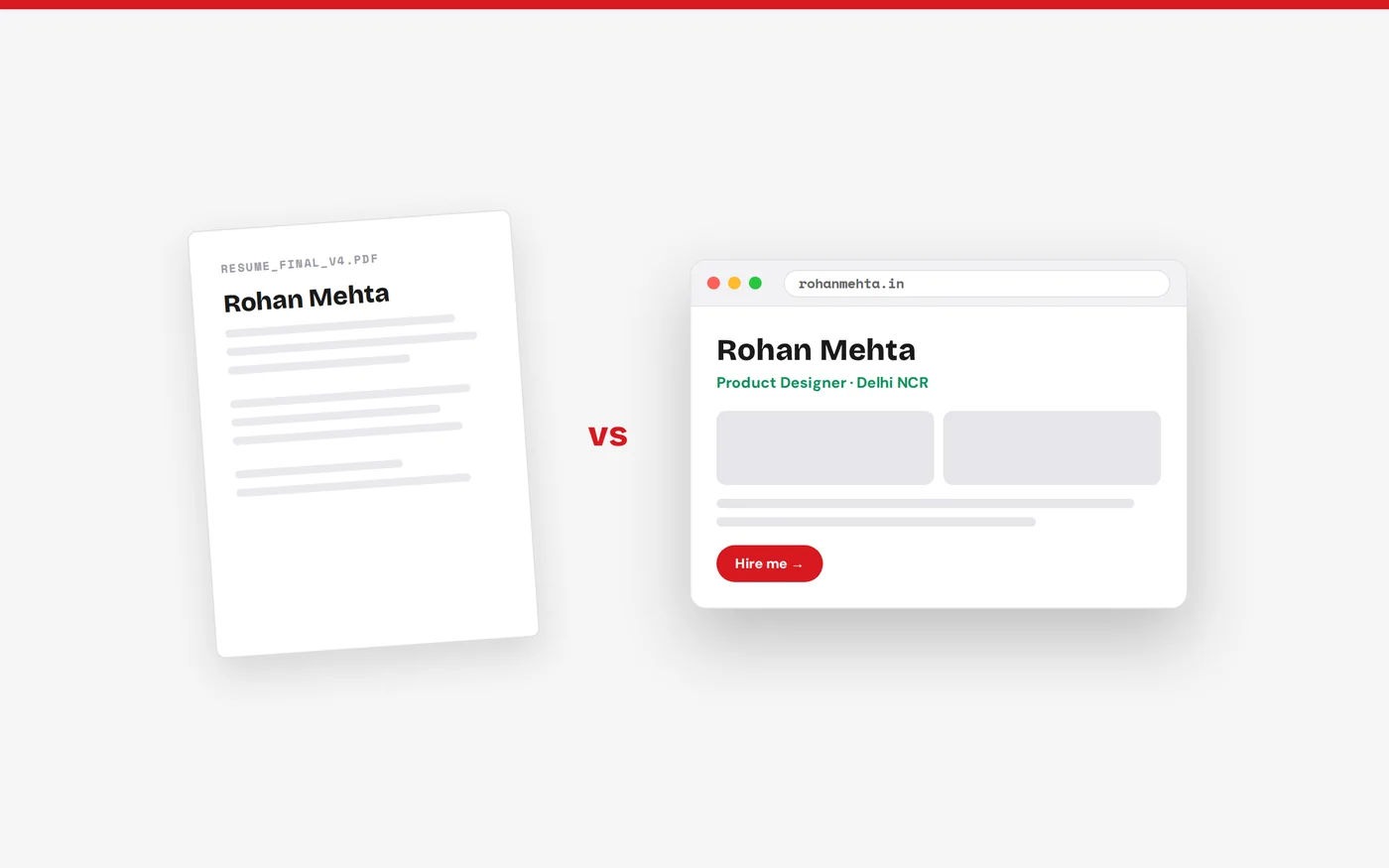
Somewhere on your laptop is a file called resume_final_v4.pdf. It has been final four times. You attach it, you wait, and you have no idea whether anyone opened it.
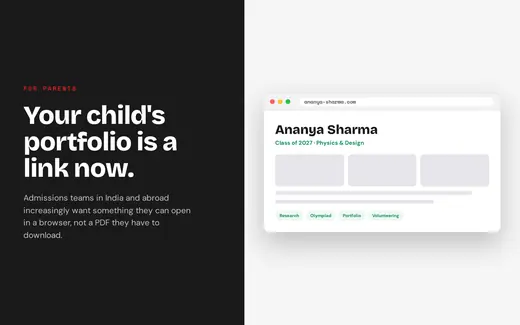
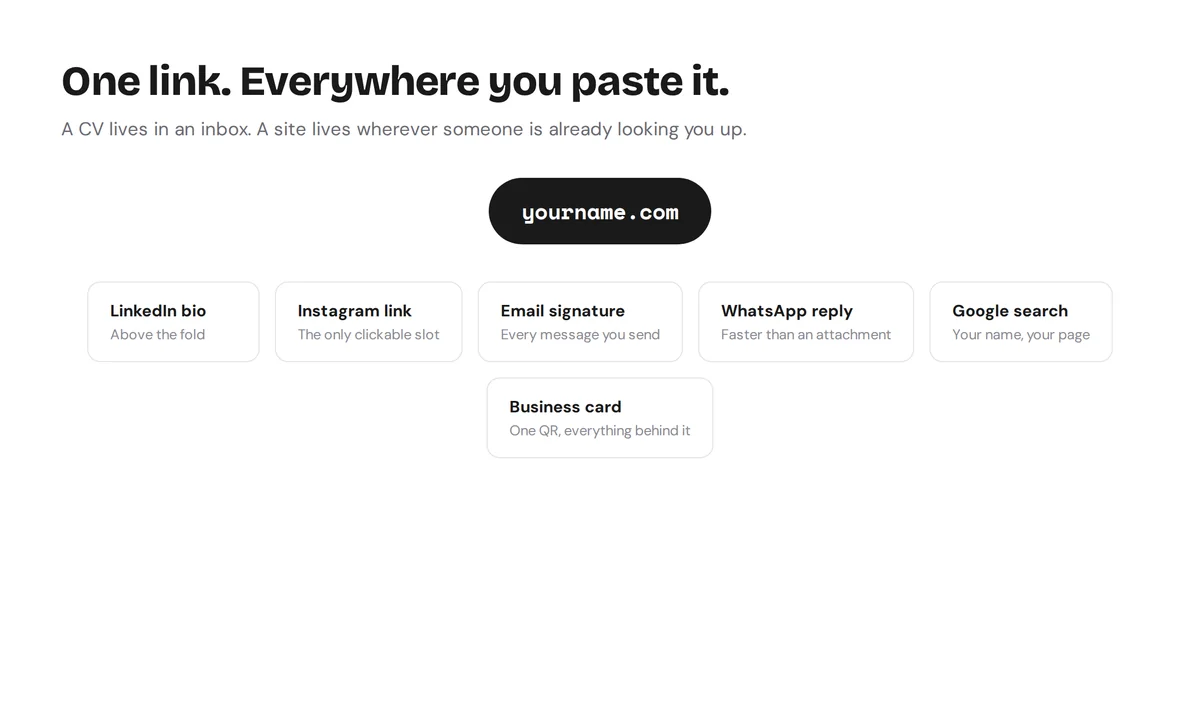
A personal website is the same information with the friction removed. One address, your name on it, live the moment someone taps it. The case for it is not that CVs are outdated. It is that a link works in about nine situations where a file does not.
Four things a link does that a file cannot
It survives the phone
Most professional conversations now start on a phone. A PDF on a phone means downloading, waiting, zooming, and rotating. Roughly half the people you send it to will decide to look later, and later usually means never. A page opens in one tap and reads correctly at whatever size it lands on.
It holds things a document cannot
Work samples, a showreel, a case study with real numbers, a testimonial from a client, a talk you gave. A CV can list that you did these. A site can show them, which is a completely different act of persuasion.
It updates without resending
You finish a project. On a CV that means a new version, and everyone holding the old file now holds outdated information about you. On a site you edit one line and every copy of the link that exists anywhere is instantly current.
It shows up when someone searches you
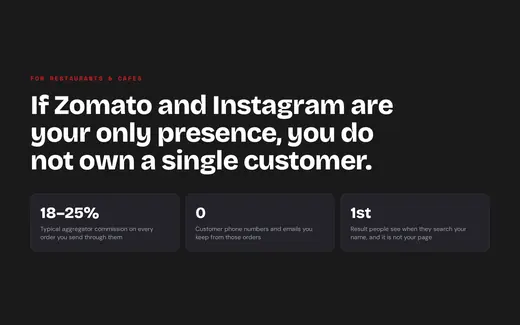
People look you up before a call. If the first result is a stranger with your name, or a dormant profile from 2016, that is the impression you are making before you speak. A personal site on your own domain generally becomes the top result for your name within weeks, and you control every word of it.
Keep the CV. You will still need the file.
Corporate applicant tracking systems parse documents, not web pages. Government forms, campus placement portals and most HR software will demand an upload. The right setup is a site as the thing you share and a PDF sitting on it as a download. Anyone telling you to abandon the CV entirely is selling you something.
What actually goes on it
The most common failure is scale. People plan a nine-page site with a blog, get overwhelmed at page two, and abandon it. One good page beats an unfinished nine.
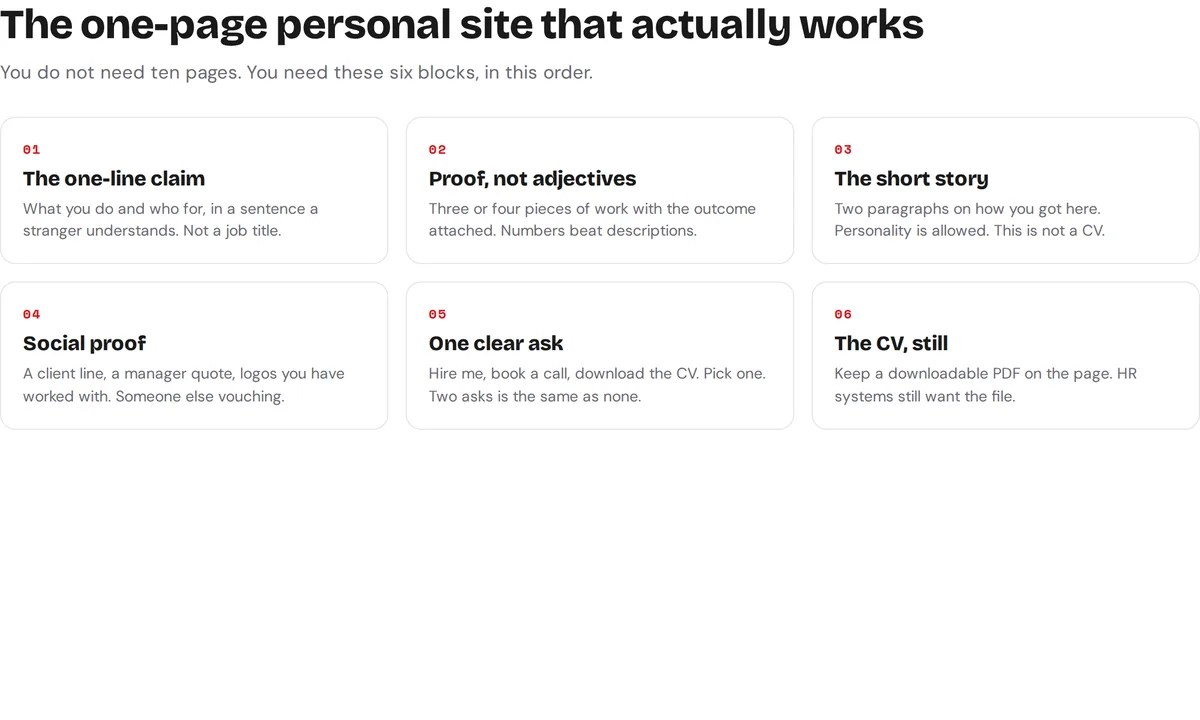
Two rules matter more than the rest. Lead with a sentence a stranger understands, not a job title, because "Senior Manager, Category Ops" tells an outsider nothing. And pick exactly one ask. Hire me, book a call, or download the CV. Offering three choices produces the same outcome as offering none.
We build these, usually in under a week
A one-page personal site starts at ₹2,999, plus ₹2,000 for domain registration and setup, so around ₹5,000 all in. Five-page sites for consultants and freelancers who need a services and pricing section start at ₹5,999.
Who this is genuinely worth it for
Not everybody needs one, and it is worth being straight about that. If you are in a stable salaried role with no client-facing work and no plans to move, a good LinkedIn profile will do.
It earns its cost quickly for freelancers and consultants who are asked to prove capability before every engagement, for anyone in a visual or creative field where the work has to be seen to count, for career changers whose CV reads like the wrong story, and for people whose name is common enough that search results are currently working against them.
The test is simple. Think about the last time somebody asked what you do. If answering properly required you to say "let me send you something", you needed a link, and you did not have one.